
Furniture guide
5 minWhich staff lockers should you choose: how many doors and what material?
How to choose employee lockers by what people store, how many you need, which coating stands up to humidity, padlock or key, and how to install them safely.
By the LuxaLine · Grupo ConstruMarket team · Updated
The short answer
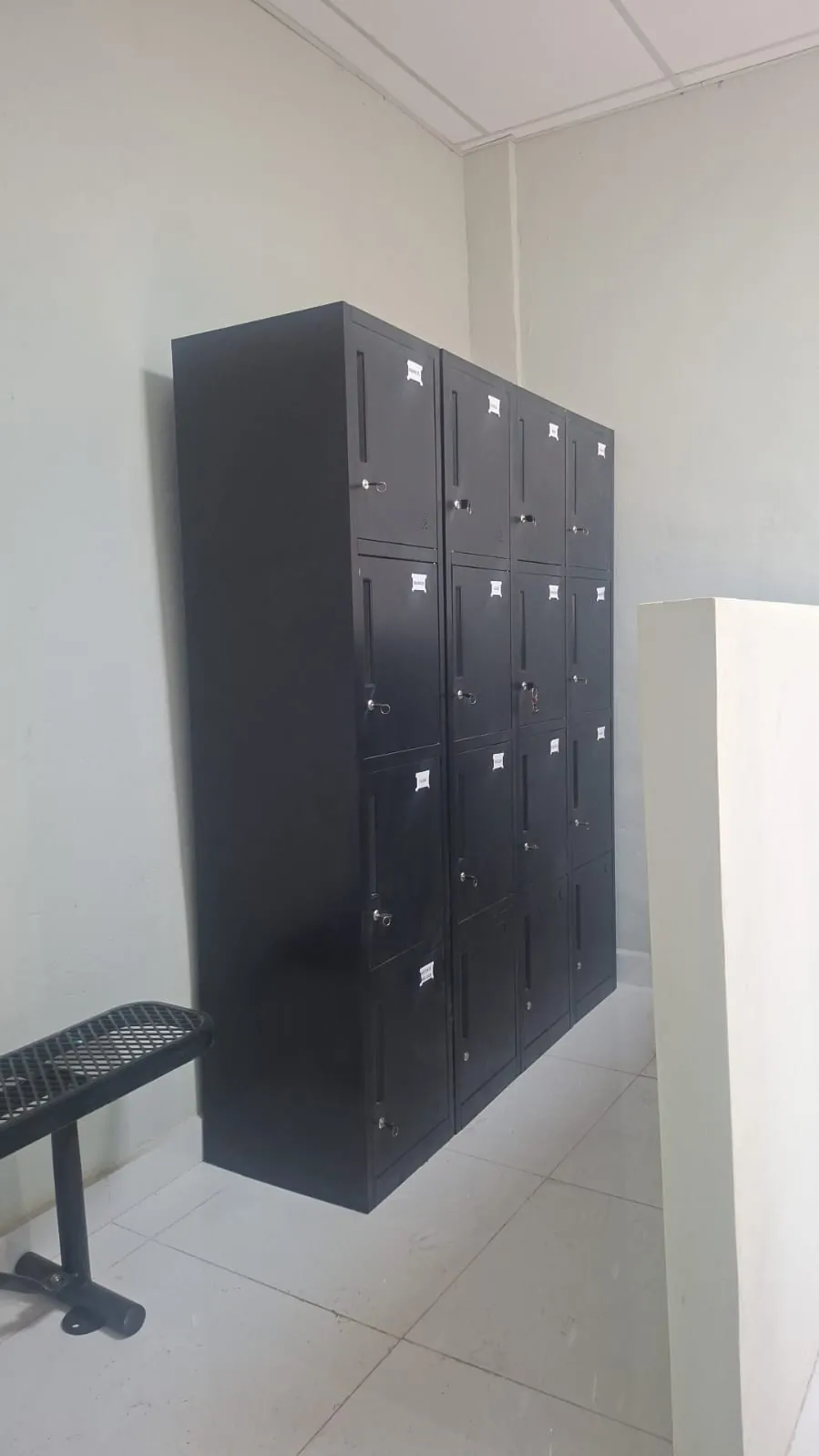
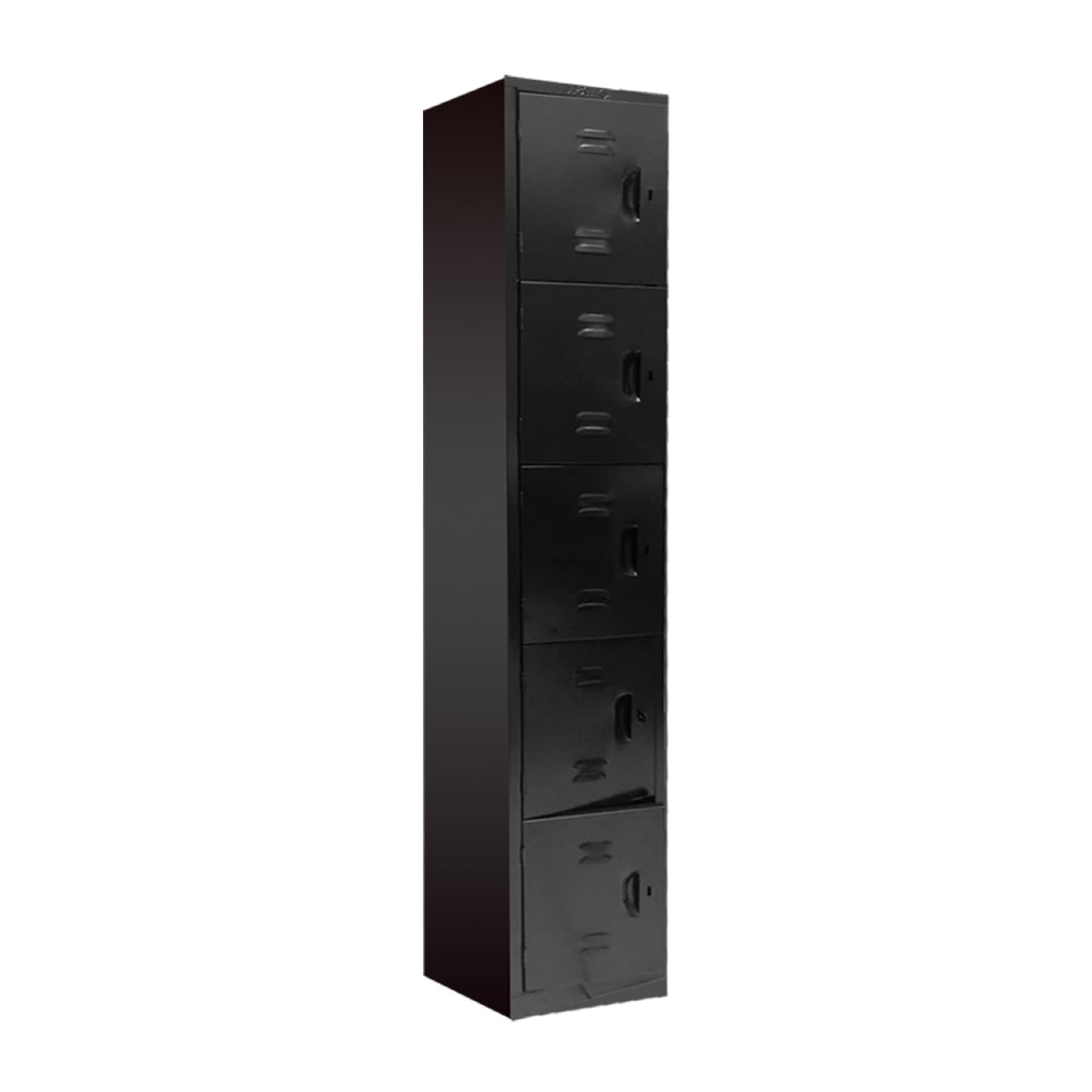
Choose by what people store: if they change into a uniform and hang clothes, a 1- or 2-door tall locker; if they only keep a bag, phone and lunch, 3 to 6 doors, which fit more users per metre of wall. Ask for sheet steel with powder coating or an anti-corrosion epoxy finish, ventilated doors and a padlock hasp or lock. Count one locker per person who will use it on site and add 10% for new hires. In the catalogue you have 4-Door Lockers (powder-coated steel with a padlock hasp) and Metal Lockers with an anti-corrosion epoxy coating.
First: what goes inside?
If the operation mixes profiles —floor staff who change and office staff who don't— combine columns with few and many doors in the same row. For supplies and files, the Tambour Cabinets open horizontally and have adjustable shelves, and the Sidney Shelving holds 100 lb per shelf.
| What people store | Doors per column | Typical settings |
|---|---|---|
| Full uniform, hanging clothes, shoes | 1–2 | Industry, hospitals, gyms, security |
| Bag, phone, lunch, laptop | 3–6 | Hybrid offices, call centres, schools, retail |
| Tools, files, supplies | Cabinet with shelves | Stockrooms, maintenance, records |
Confirm the available door configurations per line with your advisor.
How many lockers you need
The base count is one per person who changes or stores things on site. If shifts don't overlap and your policy allows it, you can assign them per shift, but that means emptying the locker when leaving and it rarely happens: with permanent staff, one per person is what works. Add 10% for new hires, interns or temporary staff. In hybrid offices with shared desks, the locker replaces the desk drawer: count one for every person on the team, not for every desk.
Material and coating
Sheet steel is the standard because it takes knocks and daily use. What decides how long it lasts is the coating: powder coating (electrostatic) gives an even, tough layer for offices and dry areas; anti-corrosion epoxy coating is the right choice where there's humidity, such as changing rooms next to showers, food plants or coastal sites. In those cases, keep lockers away from direct splashing, lift them off the floor on a base or legs so cleaning water doesn't sit on the steel, and ventilate the room.
Ask for ventilated doors (louvres or perforations): a closed locker with damp clothes or food breeds odours and rust from the inside.
Padlock, key or combination
- Padlock hasp: each person brings their own; the company doesn't manage keys. The simplest option for industry and gyms.
- Keyed lock: tidier looking, but it requires controlling copies and keeping a master key secure.
- Combination or electronic: useful with high user turnover. Confirm availability per line before specifying it.
Safe installation
A tall, narrow locker can tip over if someone hangs on the door. Anchor it to the wall or bolt the columns together, and level it so the doors close properly. In front of the row, leave the width of an open door plus a 90 cm aisle; if you put a bench in the middle of the changing room, count its width too. Lockers appear in several of our typical spaces: schools and clinics and practices.
Common mistakes
4-door lockers where people change
A uniform doesn't fit folded into a small compartment. Where people change clothes, 1- or 2-door columns.
Standard paint in a humid changing room
Humidity finds every scratch. Next to showers or in coastal areas, anti-corrosion epoxy coating and ventilation.
No anchoring
A free-standing locker can tip over. Anchor it to the wall or join the columns at installation.
Counting with no spare
The first new hire ends up without one. Add 10% at purchase; matching the same model and colour later costs more.
Frequently asked questions
How many doors should an employee locker have?
It depends on what they store: 1 or 2 tall doors if they change into a uniform and hang clothes; 3 to 6 doors if they only keep a bag, phone and lunch.
How many lockers do I need for my staff?
One per person who changes or stores things on site, plus 10% for new hires. In offices with shared desks, one per team member.
Which locker stands up to changing-room humidity?
Sheet steel with an anti-corrosion epoxy coating, with ventilated doors and lifted off the floor. The Metal Lockers in the LuxaLine catalogue have an anti-corrosion epoxy coating.
Is a padlock or a key better?
A padlock hasp is simplest: each person brings their own and the company doesn't manage keys. A keyed lock looks tidier, but you have to control copies and a master key.
Do lockers have to be anchored to the wall?
Yes, it's advisable: a tall, narrow locker can tip over if someone hangs on the door. Anchor it to the wall or bolt the columns together during installation.
Where to see it in the catalogue
Come and try the pieces
LuxaLine furniture on display at ConstruMarket stores in El Salvador and Nicaragua. Book your visit: suggest a day and an advisor confirms the time.
Book your visitHow many people, and what do they store?
Tell us how many people, whether they change into uniforms and where the lockers go. We'll propose configuration, quantities and coating.
An advisor gets back to you during business hours.