
Furniture guide
5 minHow do you clean and maintain office furniture so it lasts longer?
A cleaning and maintenance plan by frequency and material, the products that damage furniture and a Do/Avoid quiz to train your team.
By the LuxaLine · Grupo ConstruMarket team · Updated
The short answer
Three things prevent almost all damage: clean with a damp cloth and mild soap (never solvents, bleach or abrasives), tighten hardware and mechanisms every quarter, and touch up metal scratches right away. The plan fits in a table: daily, wipe surfaces; weekly, mild soap on melamine and PU, vacuum the mesh and glass cleaner on glass; quarterly, tighten bolts, lubricate gas lifts and slides and rotate chairs between desks; yearly, full inspection and a replacement plan by area. Train your team with the quiz on this page.
The plan, by frequency
| Frequency | What to do |
|---|---|
| Daily | Damp-wipe worksurfaces and HORECA tables · check chairs roll without jamming |
| Weekly | Mild soap on melamine and PU · vacuum technical mesh · glass cleaner on tempered tops · check visible hardware |
| Quarterly | Tighten bolts and mechanisms · lubricate gas lifts and slides · touch up metal scratches · rotate chairs between high- and low-use desks |
| Yearly | Full structural inspection · assess reupholstery · replacement plan by area |
By material
What each material is and where it performs, in the guide on materials and finishes.
- Melamine: damp cloth and mild soap; dry the joints. Standing water on an edge swells the board.
- Tempered glass: glass cleaner; protect the edges from knocks.
- Technical mesh: gentle weekly vacuum; spots with a damp cloth and mild soap.
- PU and eco-leather: damp cloth with mild soap, dried straight away. Keep out of direct sun.
- Polypropylene: water and soap; outdoors, only UV-protected lines.
- Steel and lockers: touch up deep scratches so rust doesn't spread, especially in humid areas.
Auditoriums, classrooms and heavy traffic
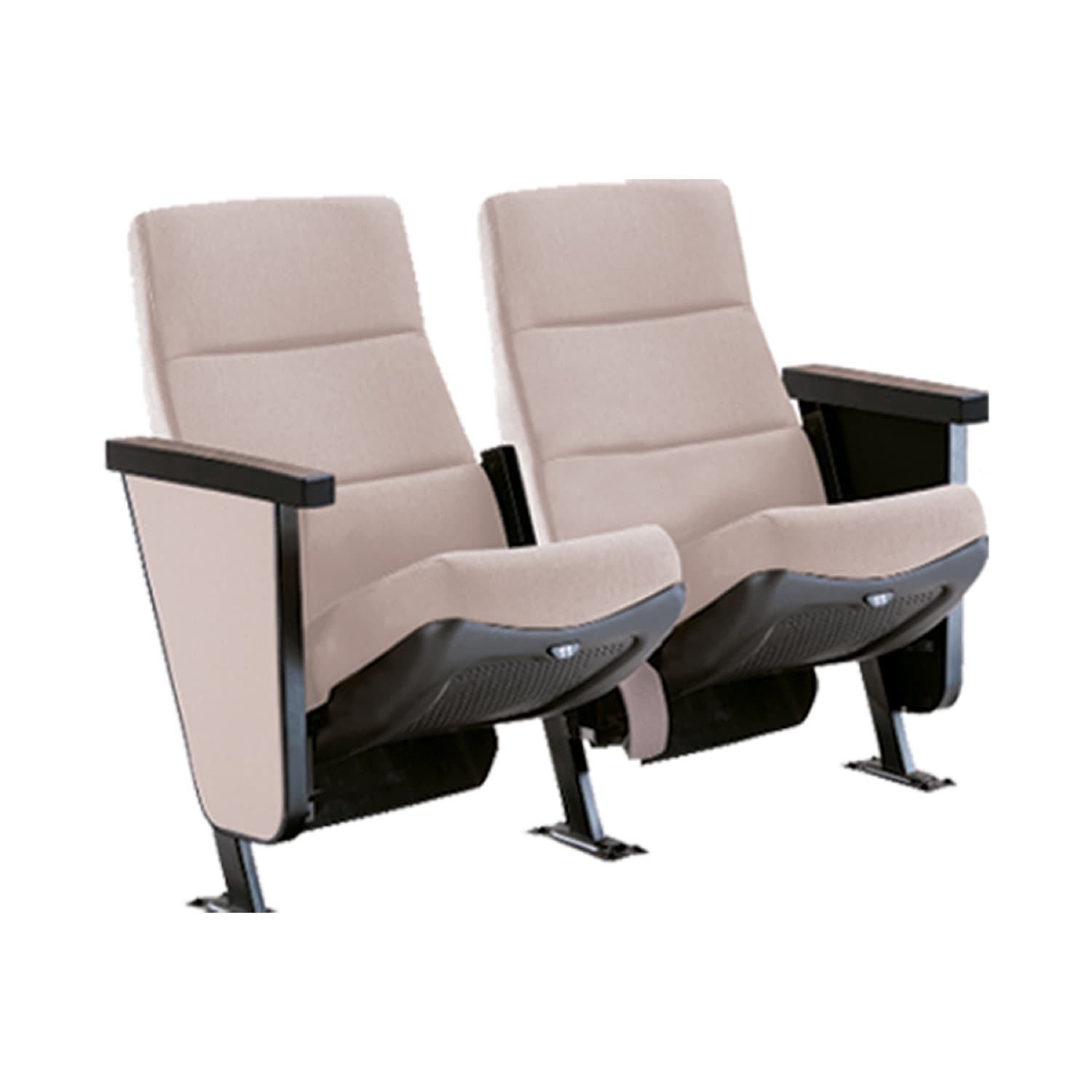
For auditorium seating, regular vacuuming, spot cleaning and anchor checks. With removable upholstery, like the Lira seat from Inorca (no staples or glue), reupholstery is done seat by seat without removing the row. Keep fabric from the same lot for replacements. In classrooms and canteens, stack chairs to clean the floor instead of dragging them: dragging loosens joints and scratches floors. To rearrange desks, empty and lift them.
How to organise it in your company
The plan works if someone owns it. Assign one person per building or floor, print the frequency table and post it in the cleaning room, and keep a simple log: date, area and what was done. Give the cleaning team neutral products only, so nobody improvises with whatever is at hand. Every quarter, walk the desks with a screwdriver and a checklist: arm and base screws, gas lifts that sink, slides that jam, scratches on metal. Whatever can't be fixed on site gets reported as a warranty claim or a replacement.
- Replacement sign: the chair sinks even after adjusting.
- Replacement sign: the foam no longer springs back and you can feel the frame.
- Replacement sign: the board has swollen at an edge or the top wobbles.
- Replacement sign: rust breaking through the paint on lockers or frames.
Quiz: Do or Avoid?
Eight real situations. Share it with your cleaning and maintenance team: 60% passes.
Clean melamine with a damp cloth and mild soap.
Use thinner or bleach on tough stains.
Gently vacuum mesh backrests every week.
Sit on the chair arms or use them as a step.
Immediately touch up deep scratches on lockers and filing cabinets.
Leave PU armchairs in direct terrace sun.
Stack Apila chairs to clear and clean the room.
Drag loaded desks to rearrange the office.
Score: 0/8
Common mistakes
Solvents and bleach
They dry out PU, dull finishes and damage joints. Mild soap.
Waiting for the chair to fail
A loose bolt becomes a broken part. Quarterly tightening.
Dragging loaded furniture
It loosens joints and scratches the floor. Empty and lift.
Untouched metal scratches
In humid areas, rust spreads from the scratch. Touch up immediately.
Frequently asked questions
Which cleaning products damage office furniture?
The three enemies: solvents (thinner, acetone), bleach and abrasives. A damp cloth, mild soap and glass cleaner safely cover the cleaning of almost all furniture.
How often should office chairs be maintained?
Weekly cleaning, quarterly hardware tightening and lubrication, and a full inspection once a year.
How is auditorium seating maintained?
Regular vacuuming, spot cleaning and anchor checks. With removable upholstery like Inorca Lira, reupholstery is done seat by seat.
How do I clean a mesh chair?
Gentle vacuuming every week and, for spots, a damp cloth with mild soap. Avoid hard brushes and sharp objects.
What do I do if a piece fails under warranty?
Report it with a photo, the model and the purchase date on LuxaLine's Customer voice page. Don't try to repair it with parts from another brand before reporting it: your advisor confirms the process and the warranty coverage in writing.
How do I stop lockers from rusting?
Touch up deep scratches right away, ventilate the area and, in humid zones, choose lockers with an anti-corrosion epoxy coating.
Where to see it in the catalogue
Come and try the pieces
LuxaLine furniture on display at ConstruMarket stores in El Salvador and Nicaragua. Book your visit: suggest a day and an advisor confirms the time.
Book your visitTime to replace?
If the yearly inspection says some pieces are done, quote a replacement in the same model or an equivalent line.
An advisor gets back to you during business hours.