
Architecture guide
5 minHow do you design a gradient perforated façade like the one at Centro Financiero Davivienda?
Which system the Centro Financiero Davivienda façade uses, how a perforation gradient works and how to specify one: zones, pattern, material, module and structure, with other perforated projects in the region.
By the LuxaLine · Grupo ConstruMarket team · Updated
The short answer
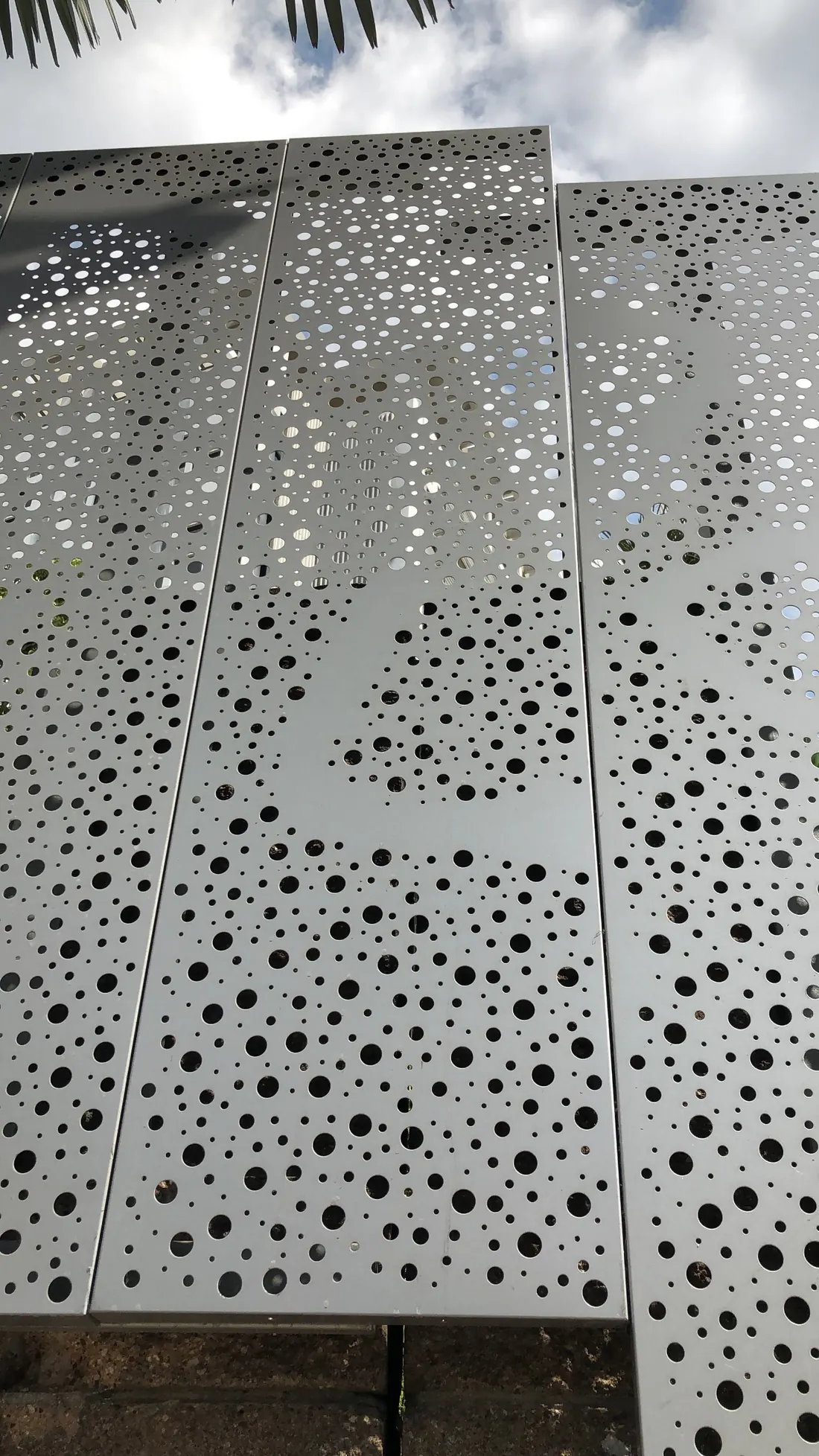
The Centro Financiero Davivienda, a bank headquarters in El Salvador, is clad in perforated Screenpanel with a special pattern drawn for the project: the perforation runs from dense to open within the same panel, so the skin lightens as it rises. That's the principle behind every gradient perforated façade: more perforation lets in more light, air and view; less perforation gives more shade and privacy. Designing one takes four decisions: what each zone of the façade needs, how the perforation varies (within the panel, by façade or by panel), which material and module, and how it hangs from the building. Screenpanel XL is a single skin that is perforated or cut by CNC to the client's drawing, in aluzinc, corten or aluminium.
What the Centro Financiero Davivienda façade has
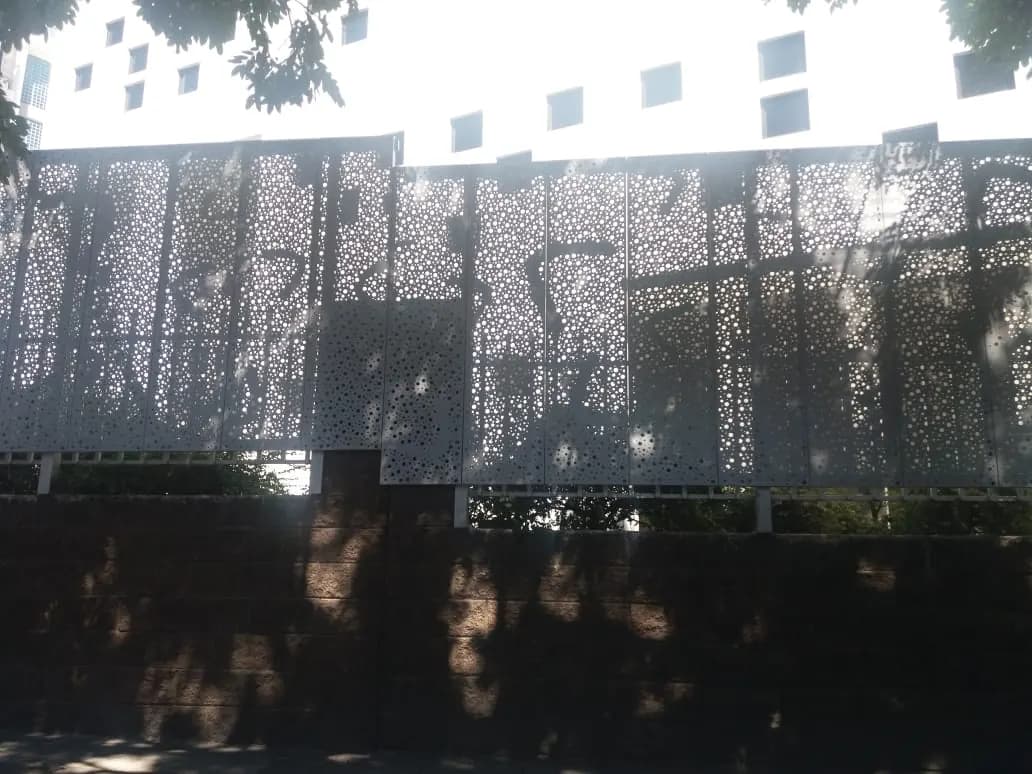
The project record says three things, and this guide adds nothing more: it's a bank headquarters in El Salvador; the cladding is perforated Screenpanel with a special pattern drawn for the project; and the perforation runs from dense to open within the same panel, so the skin lightens as it rises. The third point is the interesting one. Instead of switching panels to change density, the gradient lives inside each piece, so the transition reads as continuous, with no jumps between panels.
See the photos on the project page and the rest of the portfolio at projects.
How a perforation gradient works
A perforated panel is described by its open area: the share of the surface that is holes. With the same material, more open area lets more light, air and outward view through; less open area gives more shade and hides more of what's behind. A gradient distributes that open area according to what each zone needs. By day, from the street, the skin looks almost solid where the perforation is dense; at night, with the interior lit, the reading flips and the pattern glows from inside.
| Strategy | How it's done | Project in the region |
|---|---|---|
| Gradient within the panel | Density changes within the same panel | Centro Financiero Davivienda (El Salvador) |
| Density by orientation | Three hole diameters depending on the façade | Edificio ALPHA (El Salvador), Screenpanel G |
| Variable density and hinged panels | Part of the skin opens | Banco Cuscatlán (El Salvador), copper Screenpanel XL |
| A pattern drawn for the wall | A bespoke figure, cut piece by piece | Hyatt Centric (Guatemala), Screenpanel XL |
| Perforation plus sun louvres | Two sun systems on two planes | Tigo Tuscania (El Salvador), Screenpanel and SL-2 louvres |
How to specify it, step by step
- 1 · Zones. Mark on the elevation what each band needs: privacy towards the street, shade from the afternoon sun, views from the offices, ventilation for plant.
- 2 · Pattern on the defined module. Draw the perforation as a vector on the real panel grid, so no figure gets cut at a joint.
- 3 · Material and finish. Screenpanel XL comes in aluzinc, corten or aluminium and installs vertically or horizontally; it accepts perforation, CNC laser cutting or a random perforation the client creates.
- 4 · Structure. The substructure and anchors are designed per project for the site's wind load; a perforated skin still takes wind.
- 5 · Sample before production. Ask for a test piece with the real pattern and look at it by day and by night. Data sheets and samples at specifiers.
Other perforated skins in the region
LuxaLine Arquitectura, the architectural division of Grupo ConstruMarket, is an authorized Hunter Douglas distributor in El Salvador, Guatemala, Nicaragua and Panama: it specifies, supplies and installs as an integrated package, with the group supervising every project.
- Edificio ALPHA: three different hole diameters depending on each façade's orientation.
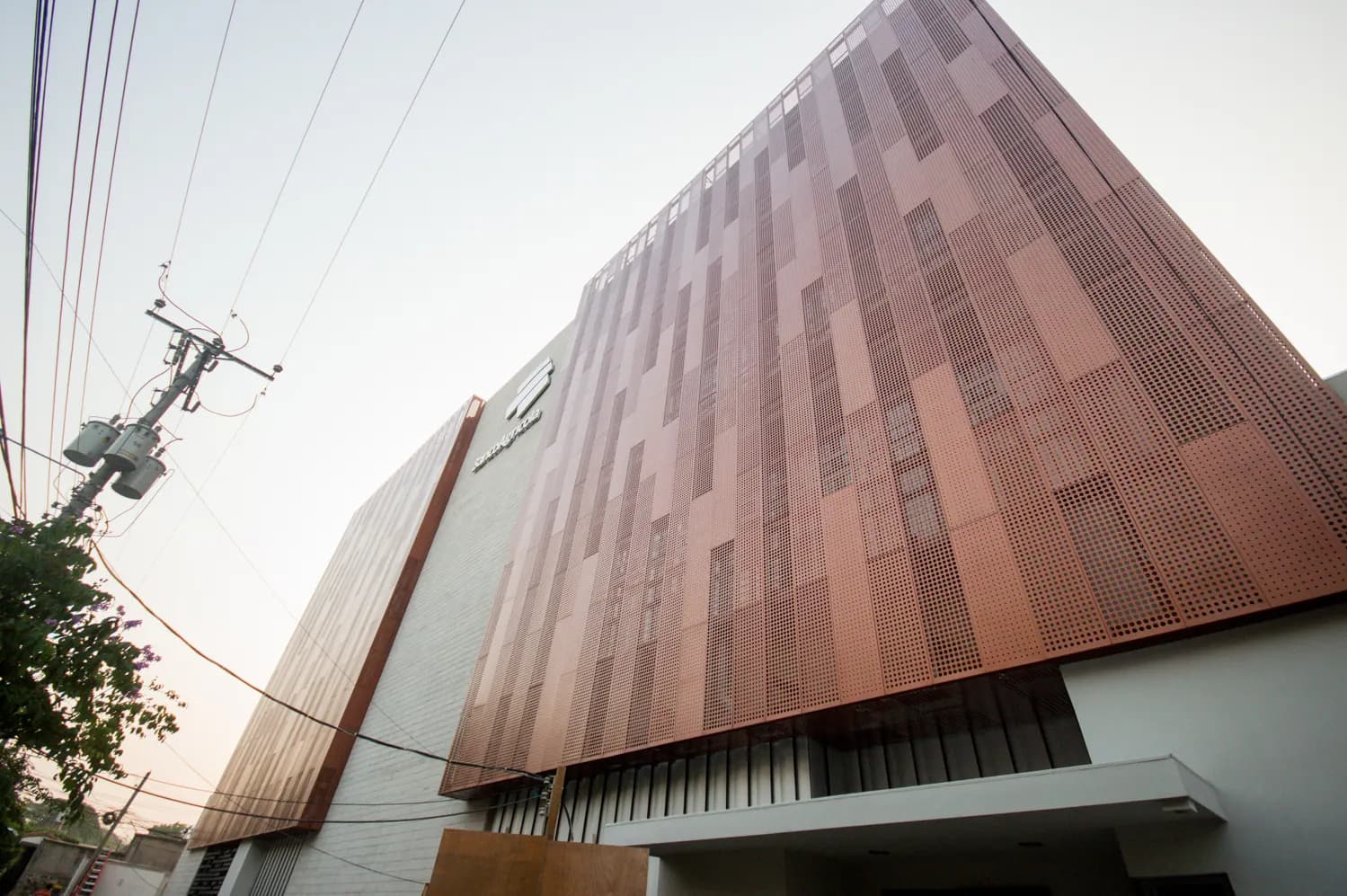
- Banco Cuscatlán: variable-density perforation in a copper finish that filters sun without closing the view; from inside the pattern reads as a grid of light.
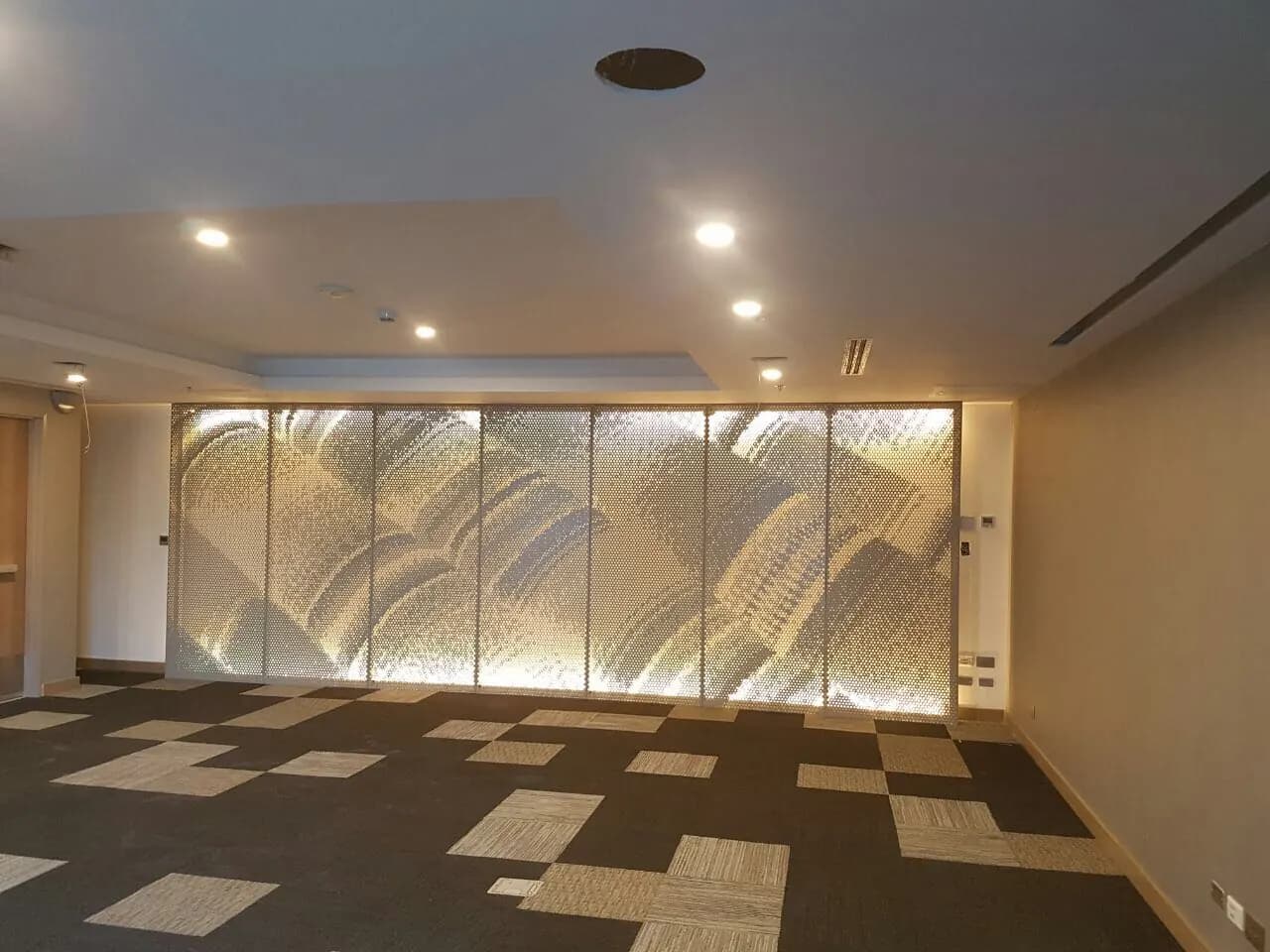
- Hyatt Centric: a pattern that isn't from a catalogue, drawn for the wall.
- Edificio ACOFINGES: dark perforated Quadroline; the grid spacing filters the western sun. If the issue is mainly sun, also compare the guide on louvres and solar control.
Common mistakes
Perforating without knowing what each zone needs
A gradient makes sense when it responds to something: privacy, sun or view. Without that it's just expensive decoration.
Drawing the pattern without the module
If the drawing ignores the joints, figures get cut between panels. Design on the real grid.
Thinking only about daytime
At night, with interior light, the skin reads the other way round. Check the sample in both lights.
Anchoring without a wind calculation
A perforated skin still takes wind. Substructure and anchors are designed per project.
Frequently asked questions
Which system does the Centro Financiero Davivienda façade use?
Perforated Screenpanel cladding with a special pattern drawn for the project. The perforation runs from dense to open within the same panel, so the skin lightens as it rises.
Who did the perforated façade at Centro Financiero Davivienda?
The project is part of the portfolio of LuxaLine Arquitectura, from Grupo ConstruMarket, an authorized Hunter Douglas distributor in El Salvador, Guatemala, Nicaragua and Panama, which specifies, supplies and installs as an integrated package with the group supervising every project.
What is a gradient perforated façade?
It's a perforated-panel skin whose hole density changes from one zone to another: more open where light and view are wanted, more closed where shade and privacy are. The change can happen within the same panel, by façade or by panel.
Can a façade panel be perforated with a bespoke design?
Yes. Screenpanel XL is perforated or CNC laser-cut to the client's figures, or with a random perforation the client creates. It's drawn as a vector on the real panel module.
Which materials does Screenpanel XL come in?
In aluzinc, corten steel or aluminium, as a single skin installed vertically or horizontally.
Where to see it in the catalogue
Want a perforated skin for your building?
Send us the elevations, the orientation and what each zone needs: shade, privacy or view. We'll propose the pattern, material, structure and installation as an integrated package.
An advisor gets back to you during business hours.