Architecture guide
5 minLouvres, sun shades or a perforated façade: how do you control sun on a building?
Which solar-control system to use by façade orientation, what changes the result (spacing, depth, perforation, colour) and real projects in El Salvador, Nicaragua and Honduras.
By the LuxaLine · Grupo ConstruMarket team · Updated
The short answer
Start with orientation. On east and west façades the sun comes in low, and an overhang won't reach: you need to cover the whole bay with closely spaced blades, vertical elements or a perforated skin. On north and south façades the sun is higher and horizontal blades or overhangs are enough. Then choose the system by what you need besides shade: louvres ventilate and screen (car parks, loggias, plant), sun shades block direct sun before it reaches the glass while keeping the view, and a perforated façade wraps the building in a continuous skin that filters light. LuxaLine Arquitectura, the architectural division of Grupo ConstruMarket, is an authorized Hunter Douglas distributor in El Salvador, Guatemala, Nicaragua and Panama: it specifies, supplies and installs as an integrated package, with the group supervising every project. See solar control.
Three systems, three jobs
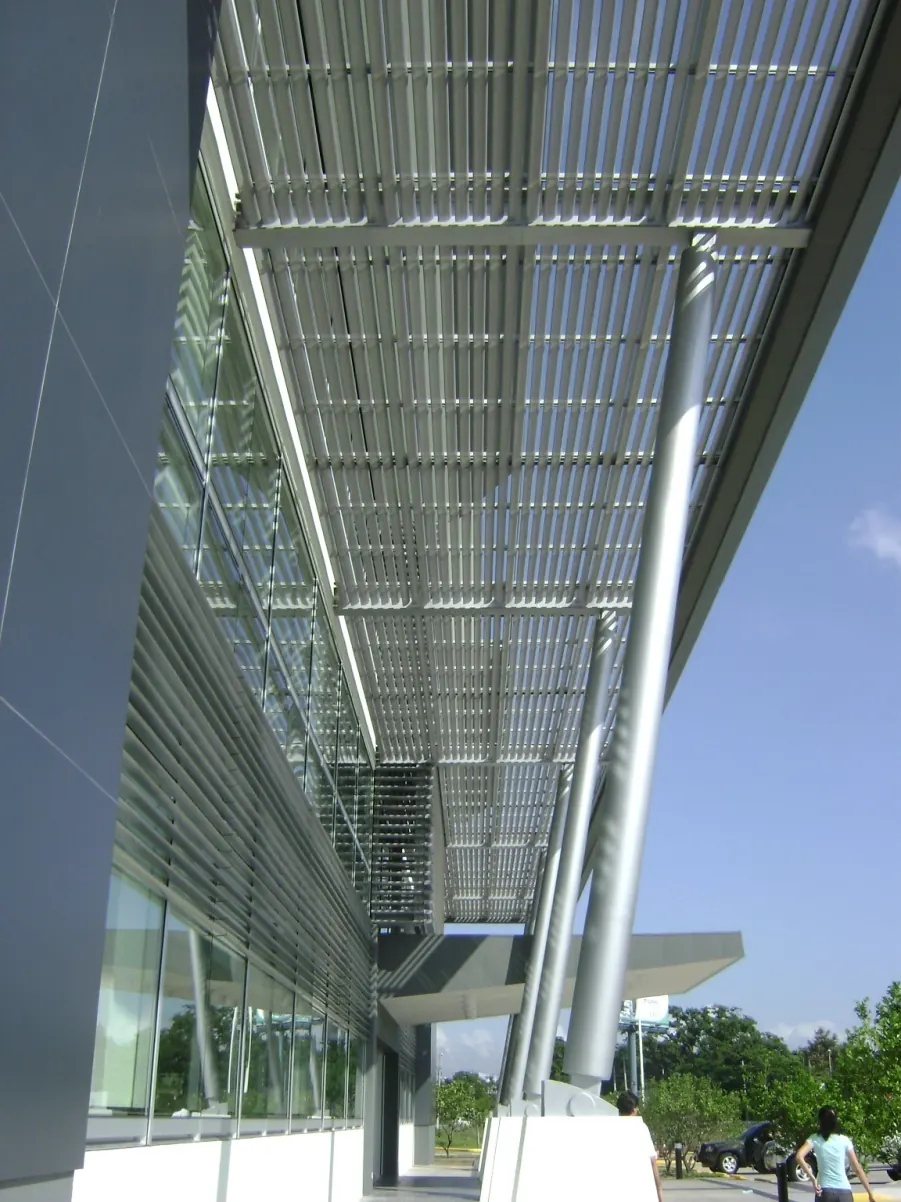
There's also LuxaLine's own aluminium-composite solar control: the LuxaLouver (22 × 130 mm profile, in 2.44 m lengths).
| System | What it does | Best for | In the catalogue | Project |
|---|---|---|---|---|
| Louvre | Fixed, closely spaced blades that ventilate and screen | Car parks, loggias, patios, parapets, HVAC plant | C23–C40 E louvre, 70S louvre | Estacionamiento Grupo Terra (perforated C-40 louvre) |
| Sun shade / brise-soleil | Spaced blades in front of the glass, fixed or rotating | Glazed offices, west façades | Celoscreen, 84R SL, Aerobrise, Quadrobrise, TermoBrise | Edificio Banpro (Celoscreen), Edificio GTZ (SL-4) |
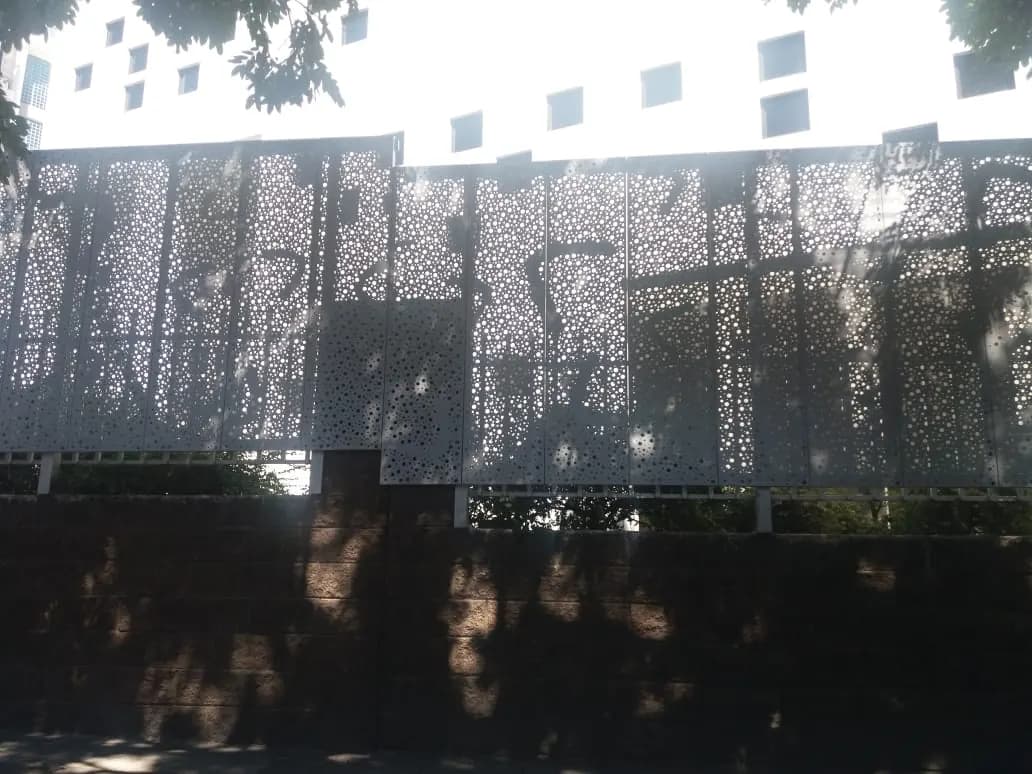
| Perforated façade | Continuous skin of perforated panel | Corporate headquarters seeking image and views | Screenpanel XL, Miniwave, Quadroline | Banco Cuscatlán, Edificio ALPHA, Centro Financiero Davivienda |
How to choose by orientation
- West: the hardest façade, because the afternoon sun arrives low and hot. Cover the whole bay: closely spaced horizontal blades, like the SL-4 on Edificio GTZ, or a perforated skin, like the Quadroline on Edificio ACOFINGES, which filters the western sun.
- East: same problem in the morning, with less built-up heat. The same solutions, often with more openness.
- North and south: the sun is higher. Spaced horizontal blades or overhangs do the job, with more view out. In tropical latitudes the north façade also gets sun in the middle months of the year.
- Each façade different: Edificio ALPHA uses perforated Screenpanel G in three hole diameters, with density changing according to each façade's orientation.
What changes the result
- Blade spacing and depth: deeper or tighter = more shade and less view. Celoscreen works at 110 to 200 mm spacing.
- Perforation: density can vary within one panel. At the Centro Financiero Davivienda the perforation runs from dense to open, so the skin lightens as it rises.
- Fixed or movable: TermoBrise rotates, manually or motorised, to adjust sun and view through the day.
- Material and finish: aluminium, aluzinc, corten steel, wood (Woodbrise 85, in thermally treated ash) or composite. Light tones reflect more heat than dark ones.
- Fire: ask for the rating on the spec sheet. The 84R SL declares ASTM E84 Class A and Fins R0, Class A2 (UNE-EN 13501-1).
Structure, wind and maintenance
A solar-control system is a second skin hung from the building: the substructure and anchors are designed per project for the site's wind load and fixed to structural elements, not to unchecked masonry. Leave access to clean the glass behind and inspect fixings. To compare two systems with numbers, request spec sheets per line in Downloads or read the guide on ACM and ventilated façades if you're also cladding.
On video
We explain it in a minute
Common mistakes
The same solution on all four façades
The sun doesn't hit every face the same way. Designing by orientation saves material where it isn't needed and protects where it is.
An overhang for the western sun
Afternoon sun comes in low and slips under the overhang. That bay needs covering.
Anchoring without a wind calculation
Blades act like sails. Substructure and anchors are designed per project.
Forgetting how to clean the glass behind
If nobody can reach the glass, the façade looks dirty within a year. Plan access from the design stage.
Frequently asked questions
What is the difference between a brise-soleil, a sun louvre and a perforated façade?
A sun louvre or brise-soleil is a blade, fixed or movable, that blocks direct sun before it reaches the glass. A perforated façade is a continuous metal-panel skin whose perforation filters light while keeping the view out. Both cut heat gain; the choice depends on orientation, view and aesthetics.
Which louvre works for a car park?
A fixed-blade louvre that ventilates and hides the levels, such as the C23–C40 E louvre. Estacionamiento Grupo Terra uses a perforated C-40 louvre: it ventilates the building and gives it a continuous skin.
Fixed or movable sun shades?
Fixed when the orientation is clear and you want zero mechanical upkeep. Movable, like the manual or motorised rotating TermoBrise, when you need to adjust sun and view at different times of day.
Which façade needs the most solar control in Central America?
The west one: afternoon sun arrives low and hot and an overhang doesn't stop it. There it pays to cover the bay with closely spaced blades or a perforated skin.
Who installs Hunter Douglas louvres and sun shades in El Salvador?
LuxaLine Arquitectura, from Grupo ConstruMarket, an authorized Hunter Douglas distributor in El Salvador, Guatemala, Nicaragua and Panama. It specifies, supplies and installs as an integrated package with the group supervising every project. Request a quote at luxaline.net/en/proyecto.
Where to see it in the catalogue
Which façade worries you?
Send us the orientation, the area and a photo or drawing of the façade. We'll propose the system and the installation as an integrated package.
An advisor gets back to you during business hours.