
Furniture guide
5 minHow do you choose an office chair for an 8-hour workday?
The 5 adjustments a full-day chair needs, when to choose high-back executive, mid-back or task, mesh or foam, and a selector with catalogue models.
By the LuxaLine · Grupo ConstruMarket team · Updated
The short answer
For 8 hours a day look for five things: seat height adjustable by gas lift, real lumbar support (a shaped backrest or an adjustable piece), arms that go up and down, a mechanism that follows your recline (synchro if possible) and a declared weight rating of 300 lb or more for institutional use. Then choose the family by role: task for intensive and shift work, mid-back executive for managers and teams, high-back executive for leadership. In warm climates, a mesh back wins on ventilation.
The 5 non-negotiable adjustments
- Seat height: feet flat on the floor and knees close to 90°. Everything else adjusts from here.
- Lumbar support: a curve that meets the lower back. A tall backrest without a curve doesn't replace lumbar support.
- Adjustable arms: level with the desk so shoulders stay relaxed; and able to slide under the worksurface.
- Mechanism: a synchro mechanism tilts seat and back in proportion and is the most comfortable for long days; with a lock, for upright work.
- Declared capacity: ask for the figure on the spec sheet. The catalogue's high-back chairs are rated at 330 lb; for institutional use, 300 lb or more.
The 4 families, one line each
High-back executive →
High back and premium mechanisms: Varsovia has a 2D headrest and an Italian Donati mechanism; Monet Alta reclines 130°.
Mid-back executive →
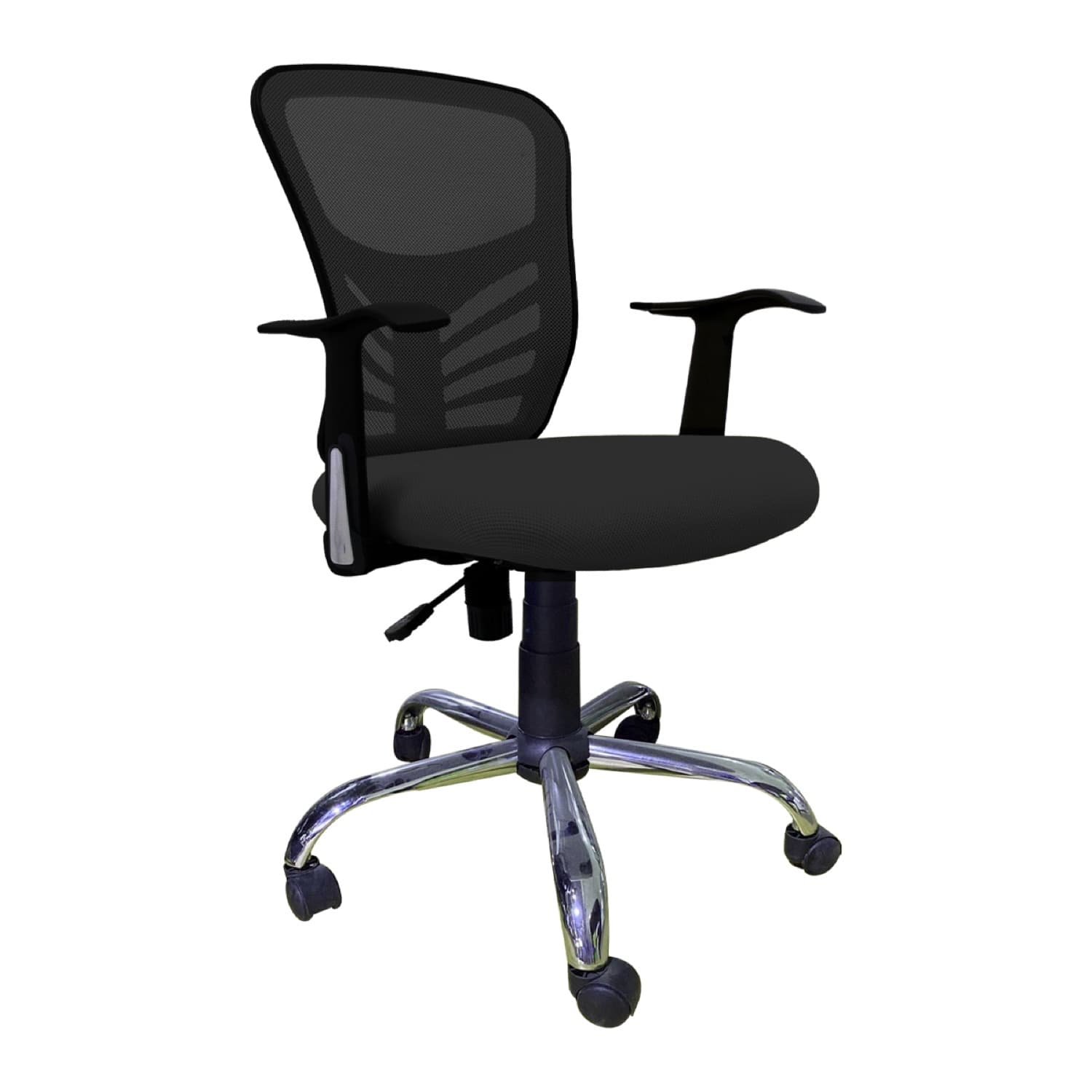
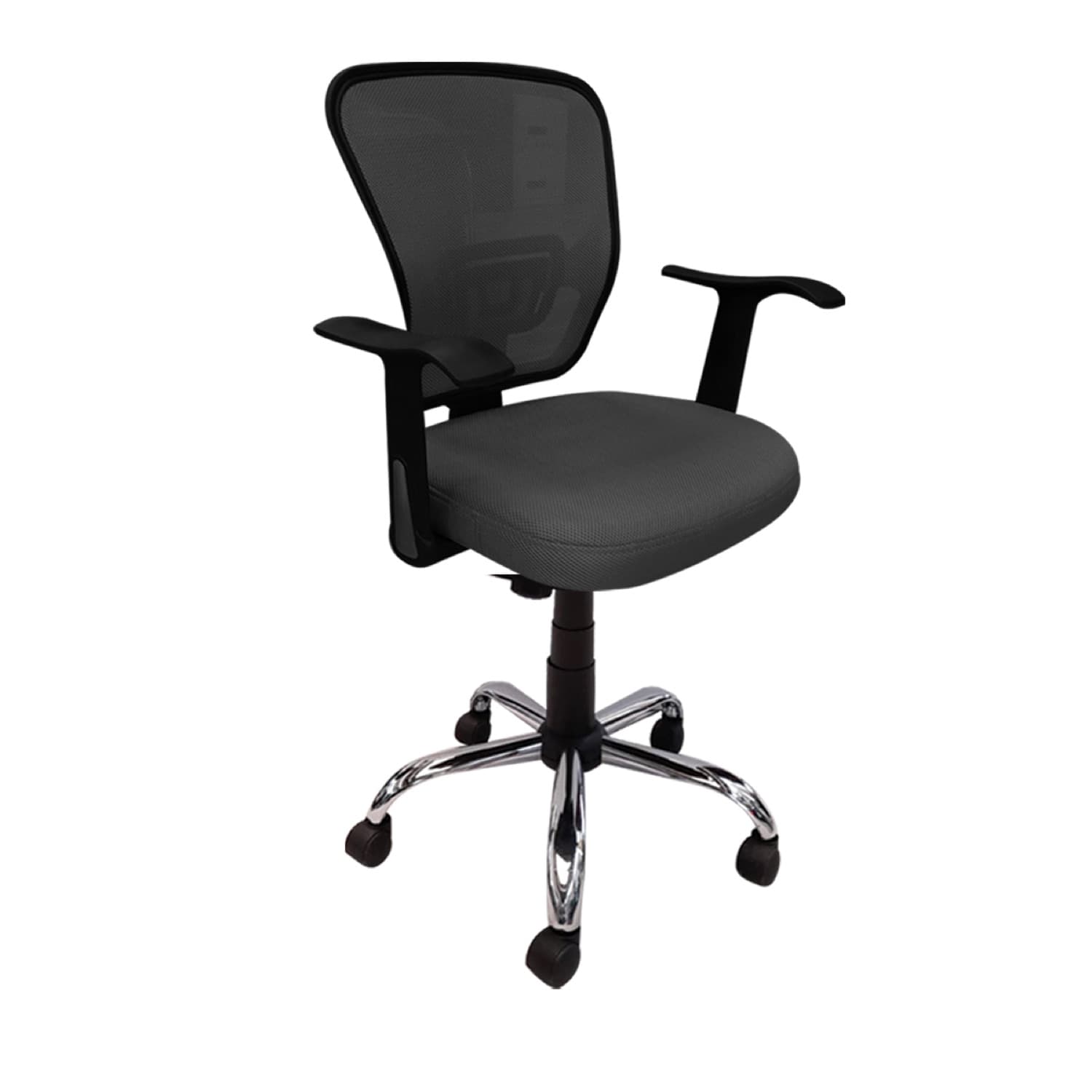
Mid back, technical mesh: the price/comfort balance for managers and teams. Amsterdam, Monet Mid-Back, Biella.
Task chairs →
For intensive and shift use: Munich uses high-density ergonomic foam for the full day; Vizcaya has a double lever for fine adjustment.
Guest & waiting →
Stackable and durable for receptions and meeting areas: from the polypropylene Apila to the eco-leather Monaco.
If it's for… then
| If it's for… | Choose | Why |
|---|---|---|
| Call centre or till, in shifts | Task chair with high-density foam | Takes several users a day; the cashier version (Munich Cajero, Amsterdam Cajero) rises to counter height |
| Analyst or designer, 8 h at a screen | Mesh mid-back with lumbar | Breathes and supports the lower back all day |
| Manager who receives visitors | Executive in PU or mesh | Image and comfort for desk meetings |
| Leadership, 6–10 h with long meetings | High-back with headrest | The headrest helps during long reclines (calls, reading) |
Mesh or foam, and the floor
In Central America technical mesh wins for long days because it lets air through. High-density foam works better for short rotating shifts and in constantly air-conditioned areas; PU (eco-leather) looks executive and wipes clean with a damp cloth, but it's warmer. Check the casters too: hard casters roll well on carpet; on vinyl, tile or wood, soft casters avoid scratches. If your team shares chairs between shifts, the adjustments must be easy to find: a chair with ten levers nobody understands always ends up in the wrong position.
Once you've chosen, set it up with the ergonomics guide and compare up to three models side by side in the comparison tool.
Try the selector
Three questions and the selector shows concrete catalogue models with the reasoning behind each recommendation.
1 · Who is the chair for?
2 · Hours of use per day?
3 · What matters most?
On video
We explain it in a minute
On video
See it before you decide
Common mistakes
Choosing by the tall backrest
A tall backrest without a lumbar curve doesn't support the back. Look for lumbar first.
Fixed arms that hit the desk
People end up far from the surface, leaning forward. Adjustable arms, or arms that fit under the worksurface.
Not checking capacity
Anyone may sit in an institutional chair. Ask for the declared capacity on the spec sheet.
Closed upholstery in an office without A/C
In warm climates, upholstered foam traps heat. Go mesh on the back.
Frequently asked questions
Which chair holds up to 8 hours of work a day?
One with adjustable lumbar support, a height-adjustable seat, adjustable arms and a synchro mechanism that follows your recline. At LuxaLine, the executive and task lines include models with those adjustments.
Mesh or foam upholstery?
In Central America technical mesh wins for long workdays thanks to ventilation. High-density foam is better for short rotating shifts and constantly air-conditioned areas.
What separates a high-back executive chair from a mid-back one?
Backrest height (high or mid), the mechanism and the materials. The high-back is designed for long leadership days, often with a headrest.
How much weight should an office chair hold?
For institutional use, 300 lb or more declared on the spec sheet. In the LuxaLine catalogue, several high-back models are rated at 330 lb.
Where can I try a LuxaLine chair before buying?
Part of the LuxaLine furniture range is on display inside ConstruMarket stores in El Salvador and Nicaragua: you can see and try it before deciding. Book your visit at luxaline.net/en/visita: suggest a day and an advisor confirms the time.
Where to see it in the catalogue
Come and try the pieces
LuxaLine furniture on display at ConstruMarket stores in El Salvador and Nicaragua. Book your visit: suggest a day and an advisor confirms the time.
Book your visitHow many chairs, and for which roles?
Tell us how many people, how many hours a day and the type of role. We'll recommend the model and quote it by volume.
An advisor gets back to you during business hours.